
Philippines: Negros Occidental Typhoon Response
Read time: - minutes
In early November, Typhoon Tino made landfall in Negros Occidental, bringing torrential rain and destructive winds that led to widespread flooding across 16+ local government units.
The impact on communities was severe. According to the Provincial Disaster Risk Reduction and Management Office, 48,290 homes were damaged, including nearly 7,000 completely destroyed. Cities such as La Carlota, Bago, and the municipality of Hinigaran were among the hardest hit, forcing thousands of families from their homes and prompting both the Provincial Government and Bacolod City to declare a State of Calamity to accelerate response and recovery.
Supporting coordination on the ground
Last November, the monday.com Emergency Response Team supported organizations and local authorities working at the heart of the response. The focus during this phase shifted from immediate relief toward early recovery, with strong emphasis on coordination, reporting, and managing large volumes of information and resources.
Before adopting structured digital workflows, many emergency response processes relied heavily on paper-based systems – from rapid needs assessments to beneficiary registration and distribution lists. During large-scale disasters, this often led to delays, data inconsistencies, and limited visibility across operations.
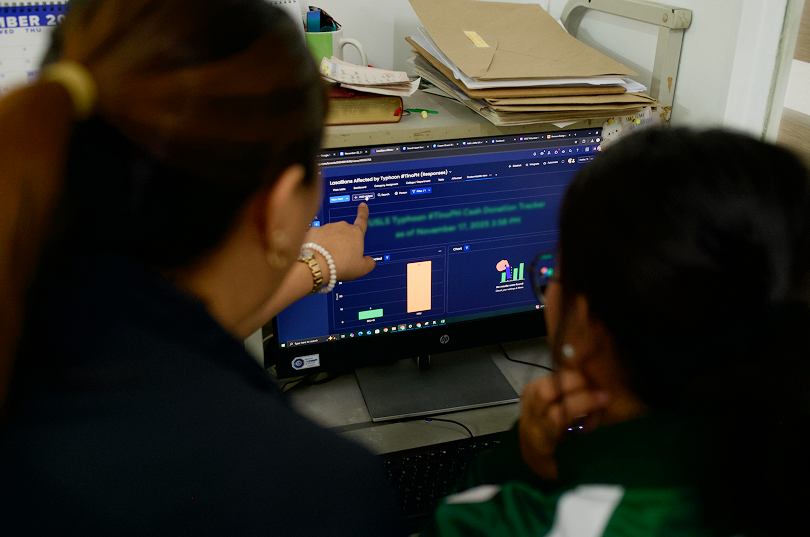
“Before, it could take several days just to consolidate the data and understand how many families had actually been assisted,” said Karl, Emergency Response Coordinator at ADRA Philippines, who led response efforts on the ground.
Across the deployment:
- 4 emergency response actors were actively supported in their operations
- 7 coordination meetings were held with humanitarian organizations and local government units
- Digital workflows were used to support internal coordination, logistics and supply tracking, reporting, and donation & inventory management
These efforts helped teams consolidate information, track assistance, and maintain clarity during a complex, multi-actor response.
With digital systems in place, information that previously required manual consolidation became available in near real-time – enabling faster decision-making, improved accuracy, and stronger coordination across teams.
“Now we have real-time visibility. We can see what’s happening across operations and make decisions much faster.” Karl added.
What we’re learning
One key takeaway from this deployment is how timing matters. As the response moved quickly into recovery, partners increasingly needed tools for consolidation and reporting – not only rapid intake. Strengthening familiarity with donation tracking and inventory management early on also proved critical for smoother adoption during high-pressure moments.
At the same time, supporting local government coordination mechanisms remains essential. Working alongside offices leading response efforts helps ensure digital systems are embedded where decisions and coordination actually happen.
The experience also reinforced the importance of having a clear, shared operational picture. Having access to real-time data across assessments, distributions, and reporting enables teams to stay aligned, reduce duplication, and respond more effectively as needs evolve.
Looking ahead
As recovery continues in Negros Occidental, we remain committed to supporting responders and local actors with practical, adaptable digital tools that help them focus on what matters most – their communities.
If your organization is responding to emergencies and navigating coordination challenges, we’re always open to connecting and learning how we can support your work.